



Q Saina Hotel Ayodhya, UP
At QSaina Ayodhya, your yatra transforms into poetry. After exploring the divine city, return to plush comfort inspired by royal heritage. Warm lighting, serene interiors, and satvik bhojan curated with care await you. As you rest, the gentle evening air carries faint temple bells — reminding you that in Ayodhya, every breath is Ram naam, and every stay is seva.
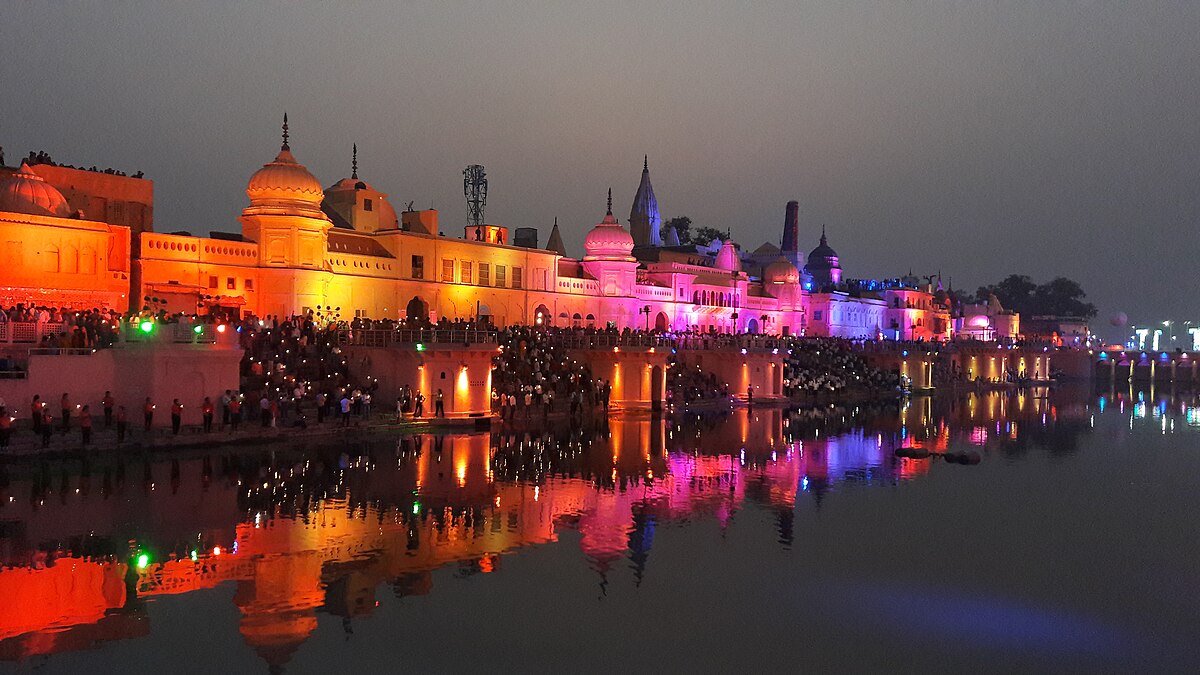
Ram Ki Paidi – The Steps to the Divine Reflection
As evening descends, hundreds of diyas light up the long stretch of Ram Ki Paidi. Their glow reflects on the river, dancing like liquid gold. You walk slowly, your feet cold on the stone, your mind silent. The sankha dhwani and chants create a rhythm that feels like your own heartbeat. Here, devotion is not practiced — it’s lived, breathed, and eternal.
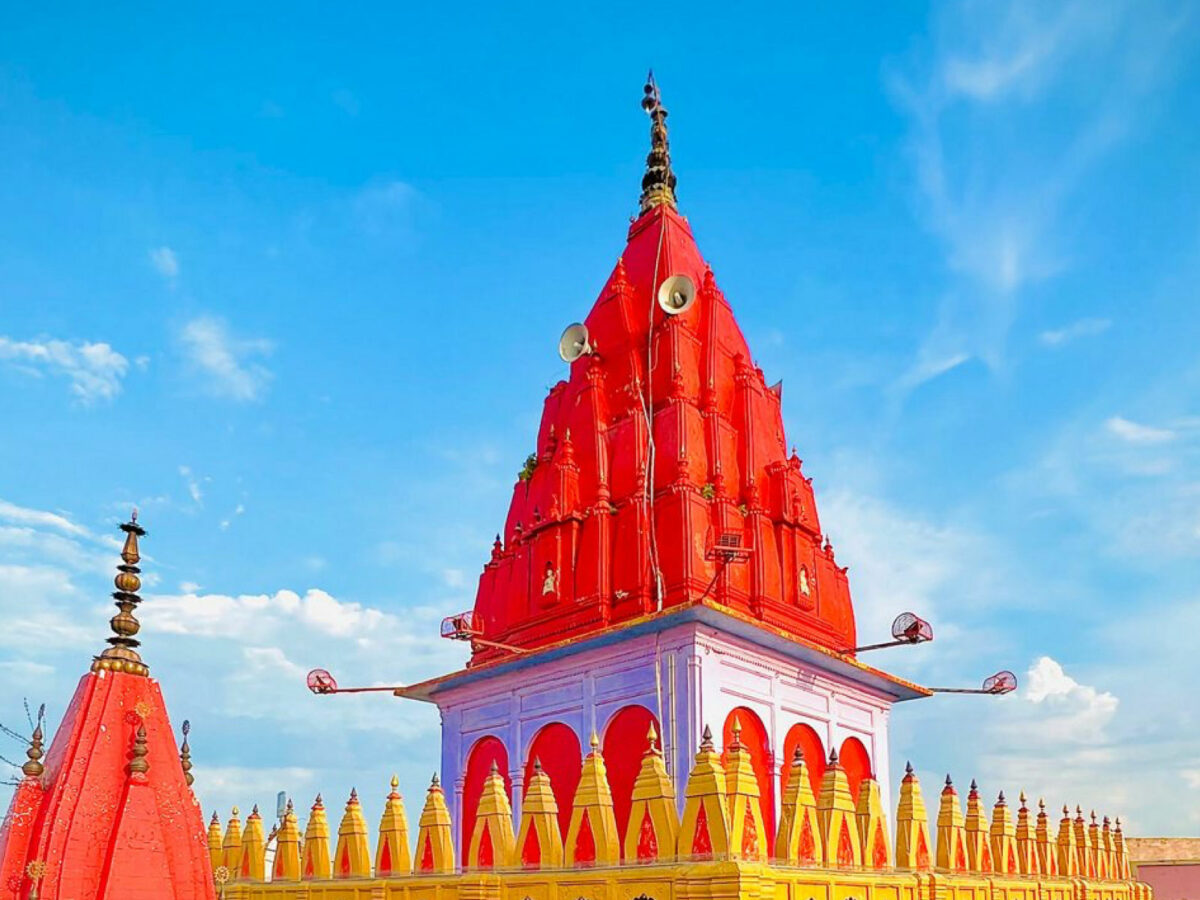
Hanuman Garhi – The Guardian of Ayodhya
Climb the steps, and the sound of Hanuman Chalisa greets you. The scent of sindoor and ghee fills the air. Inside the small shrine, the idol of Bajrang Bali radiates strength — not fierce, but protective. As you bow your head, a priest ties a red mauli around your wrist, whispering blessings. You feel safe, guarded — as if Hanumanji walks beside you on your yatra.
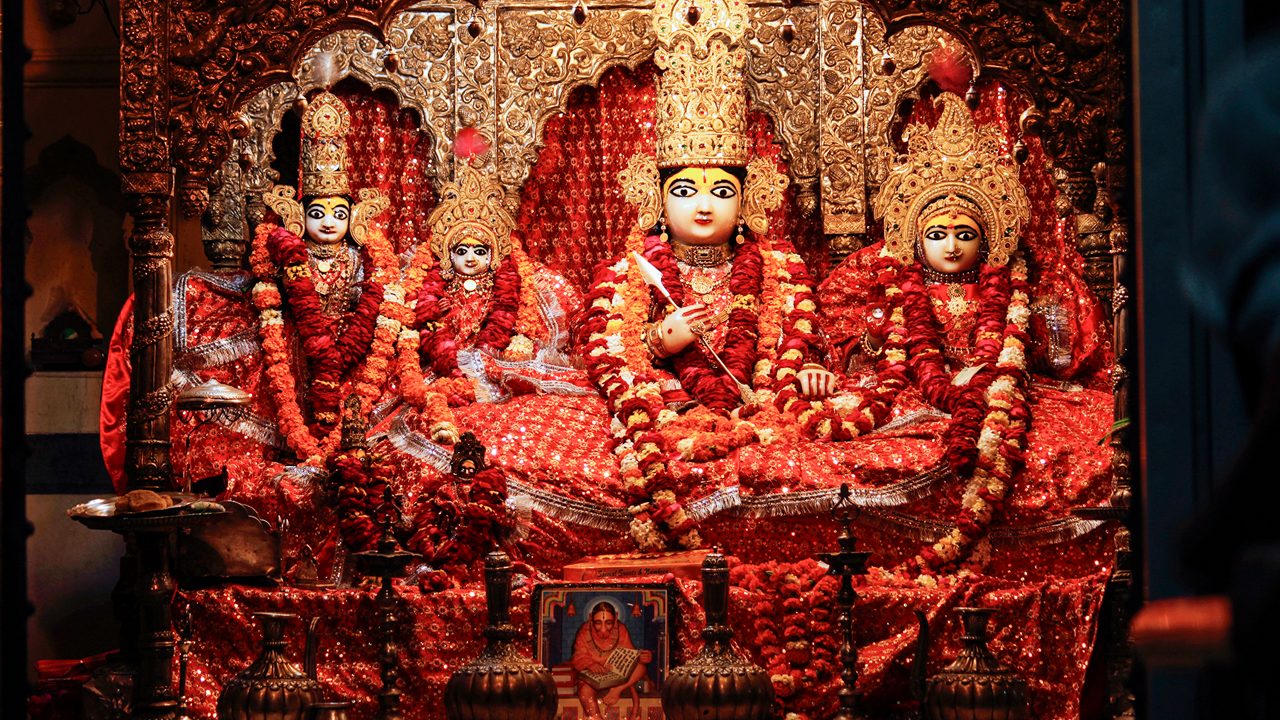
Kanak Bhavan – Sita Ram’s Golden Abode
Stepping inside Kanak Bhavan feels like entering a palace of light. The walls shimmer with mirrors and golden carvings, and everywhere you look — Sita-Ram, together, smiling. The priests chant softly, and the sound blends with your heartbeat. This isn’t just architecture; it’s prem ka mandir — the pure essence of love and loyalty that defines Ayodhya.
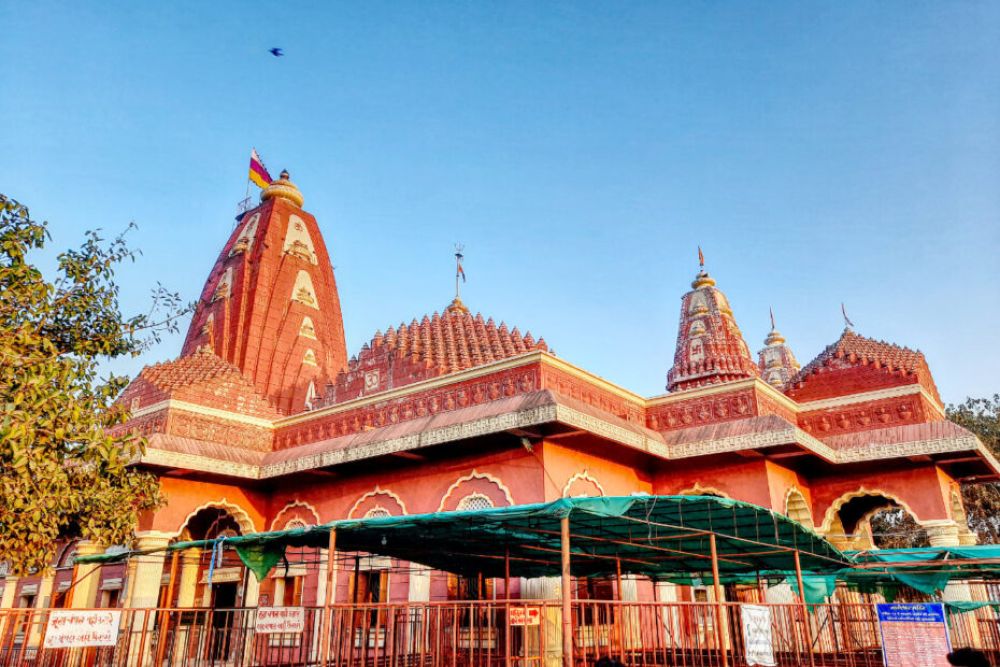
Nageshwarnath Temple – Where Shiva Meets Rama
Built, they say, by Kush — Lord Rama’s son — this temple connects devotion across deities. Bells ring, and the fragrance of bilva patra and sandalwood fills the sanctum. You offer jal arpan to Mahadev, and it feels as though Ayodhya bows to Kashi in reverence. This is bhakti ka sangam — where every god is family.
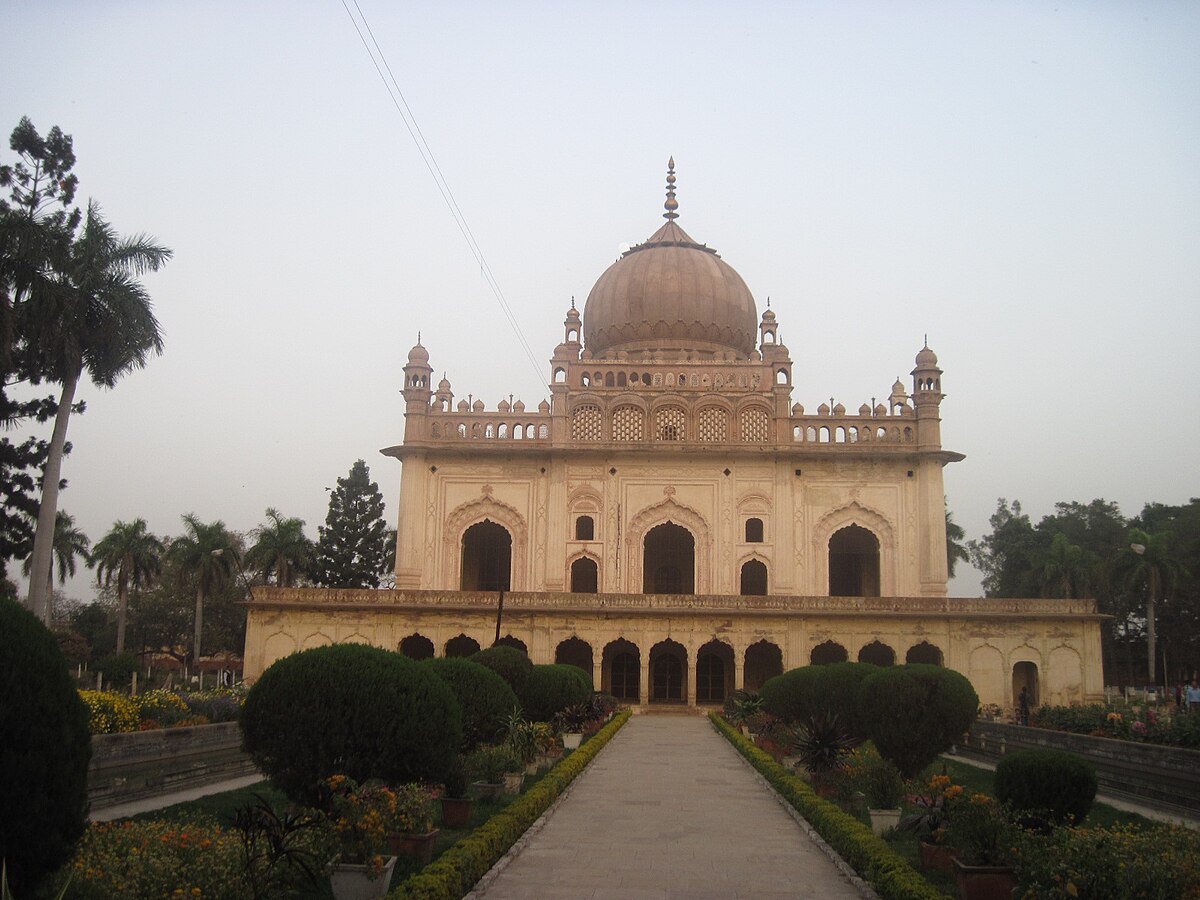
Gulab Bari
A historical monument in the Faizabad/Ayodhya district: the tomb of Nawab Shuja‑ud‑Daula. Known for its gardens of roses and colonial-era architecture. Offers a break from purely religious sites — good for heritage/language of architecture and peaceful garden ambience.
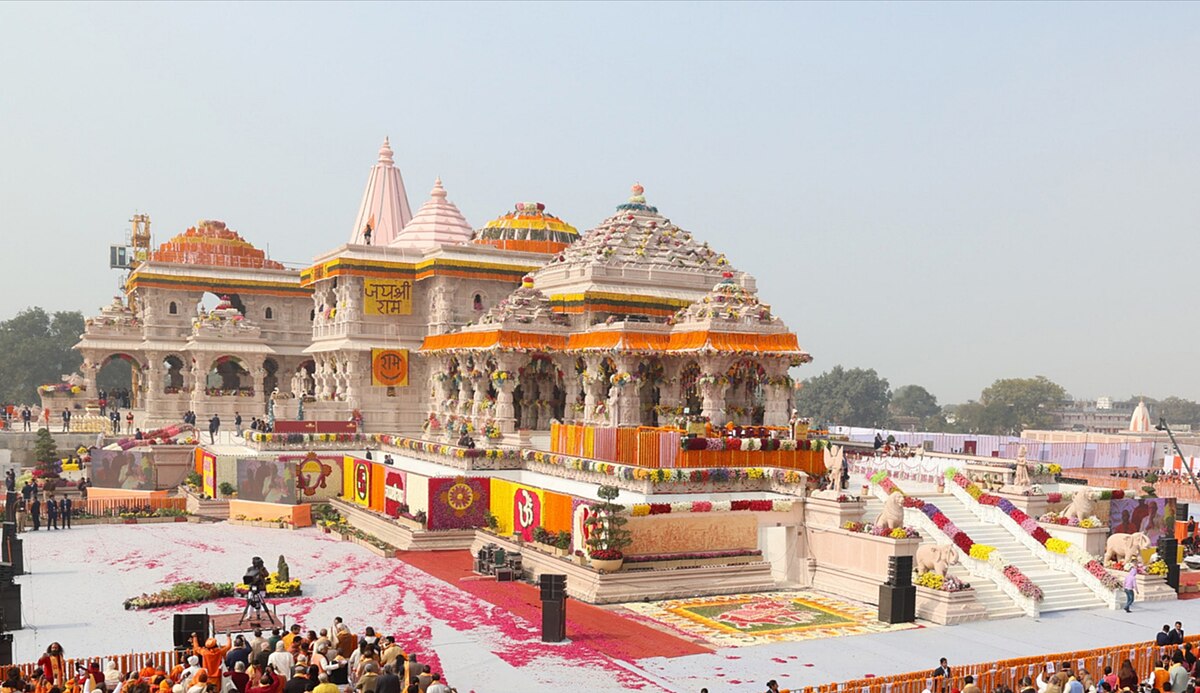
Ram Janmabhoomi Mandir – The Soul of Ayodhya
As you walk through the grand entrance, the sound of “Jai Shri Ram” fills the sky. The marble glows under the sun — white yet warm, radiant yet humble. Standing before the garbhagriha, you feel your heartbeat sync with the rhythm of the temple bells. The idol of Balak Ram looks serene, almost alive, as if smiling back at you. You fold your hands, and for a moment, the entire world feels still — only faith breathes here.
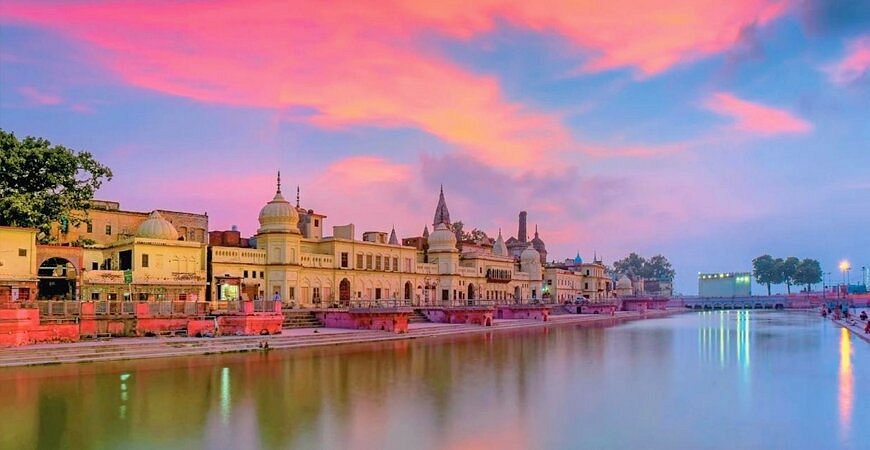
Sarayu Ghat – Where Time Flows in Prayers
You walk along the riverbanks as the sarayu flows gently, its surface shimmering with the reflection of the aarti lamps. Devotees perform deepdaan, and the glow spreads like stars upon water. The breeze brushes your face — cool, calm, divya. You dip your palms into the river; the touch feels ancient, purifying, almost like a blessing from Mata Sarayu herself.
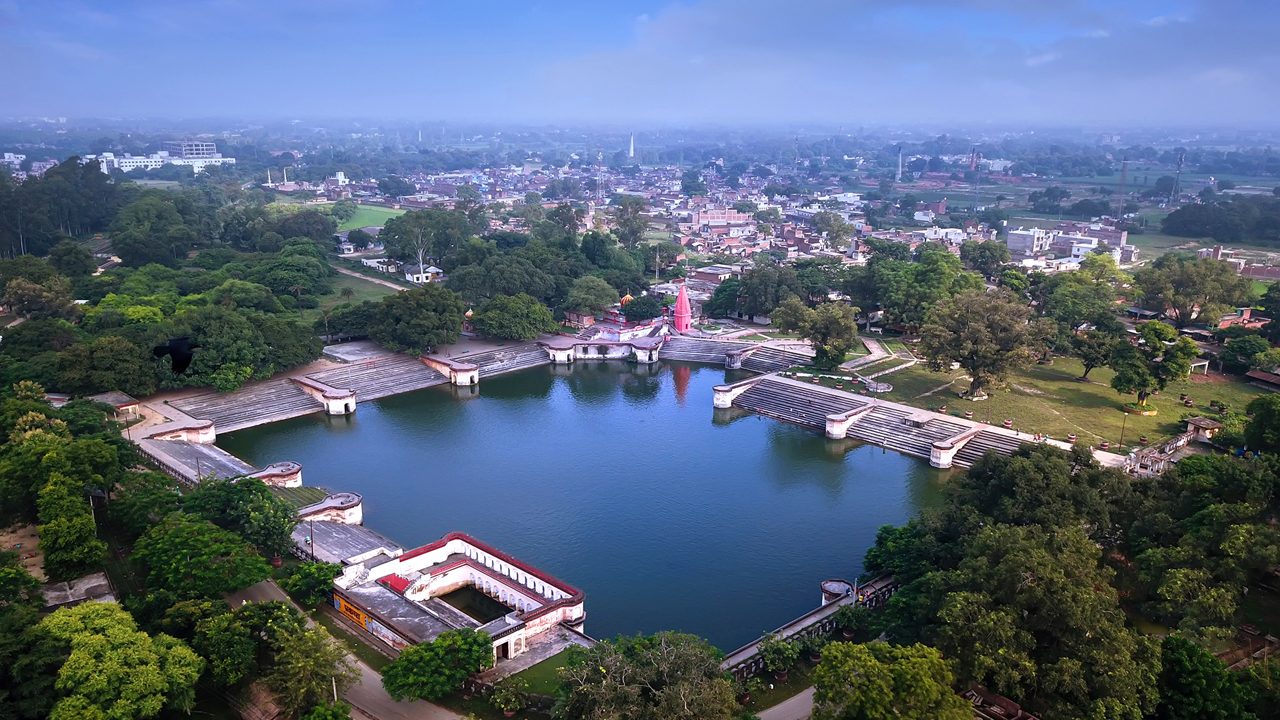
Treta ke Thakur – The Temple of Time Itself
As you reach the ancient temple, time feels different. They say Lord Rama performed the Ashwamedha Yajna here. The air hums with unseen energy. You look at the old carved idols — Rama, Sita, Lakshmana, Bharata, Shatrughna — standing in eternal grace. You realize history isn’t past here; it’s alive, breathing in every mantra.
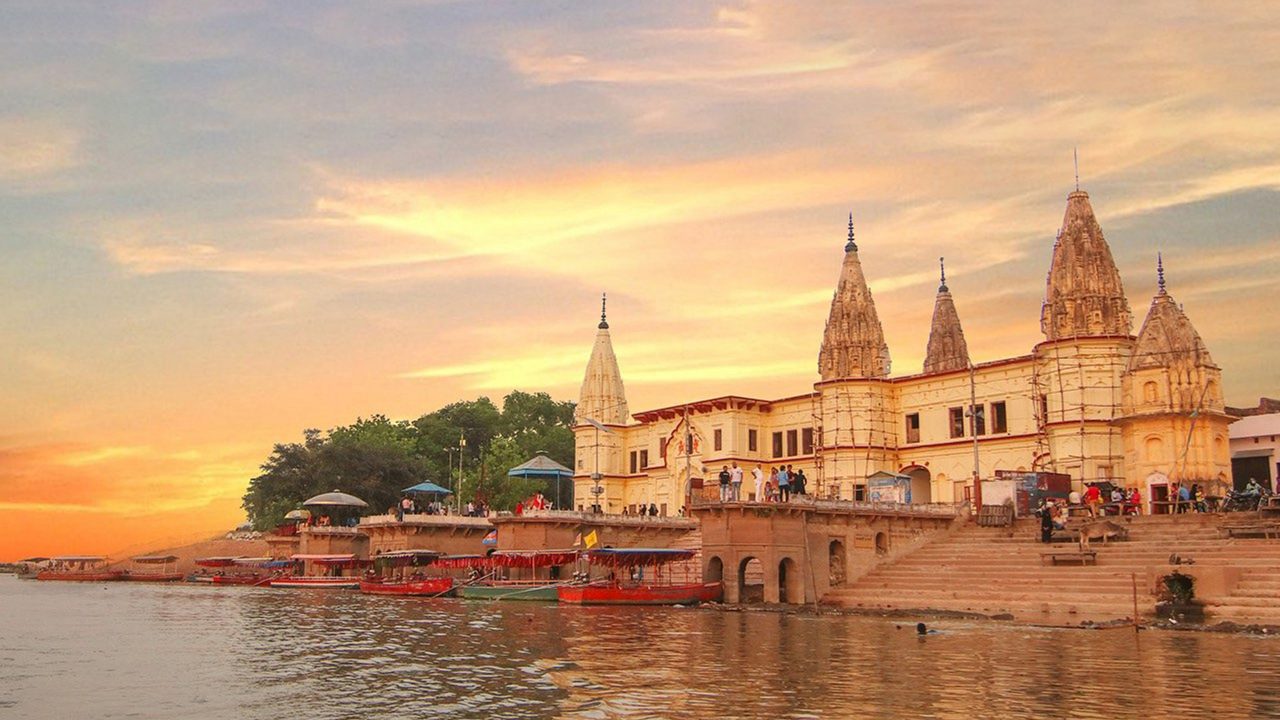
Guptar Ghat – The Final Resting of Divinity
The Sarayu flows quiet here. You sit by the steps, watching the sun melt into gold. It’s said Lord Rama took jal samadhi at this very spot. As the evening aarti begins, the chants rise, mingling with the soft splash of the river. You close your eyes — the air grows still, and peace settles deep, like a divine whisper: Satyam Shivam Sundaram.